Book your Hotel now...

Klook.com
Showing posts with label pahp. Show all posts

Friday, January 30, 2026

Stronger Markets, Stronger Farmers: The PAHP–Sagip Saka Effect in Cagayan


The Partnership Against Hunger and Poverty (PAHP) and the Sagip Saka Act (Republic Act 11321) have supported Agrarian Reform Beneficiary Organizations (ARBOs) in Cagayan — focusing on market access, income stabilization, organizational capacity, and legal procurement frameworks:


📌 1. PAHP: Direct Market Linkages and Sales Opportunities

PAHP, implemented by the Department of Agrarian Reform (DAR) under the Agrarian Reform Beneficiaries Development and Sustainability Program, connects ARBOs directly with institutional buyers (government agencies and partner institutions) for the supply of agricultural produce. Through PAHP:

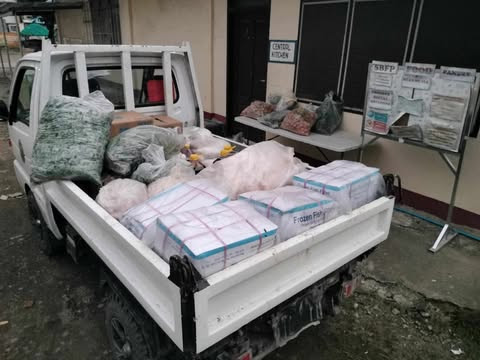
  • ARBOs are linked to formal institutional markets such as feeding programs (e.g., Bureau of Jail Management and Penology facilities supplying PDL feeding needs), allowing them to sell locally grown vegetables and other produce on agreed terms.

  • These market agreements provide ARBOs with predictable buyers and stable sales opportunities, reducing the reliance on volatile informal markets and middlemen, which often depress farmgate prices.

  • Across all regions where PAHP is implemented, such partnerships have generated structured sales agreements worth billions for agrarian reform beneficiary enterprises.

In practical terms, for ARBOs in Cagayan:

  • Participating ARBOs can secure purchase contracts with government feeding programs and other local institutional partners.

  • Regular procurement encourages consistent production planning and better logistics, which helps ARBOs improve collective capacity and negotiate better pricing.

Even though specific sales figures for Cagayan are not always published regionally, the PAHP model has been replicated nationwide and supports ARBOs’ income and market participation in the province in similar fashion to other regions.


📌 2. Sagip Saka Act (RA 11321): Legal Foundation for Direct Government Procurement

The Sagip Saka Act institutionalizes market access by requiring national and local government agencies to procure agricultural and fishery products directly from accredited farmers’ and fisherfolk enterprises — including ARBOs — for use in feeding programs, relief operations, and other government needs.

Key mechanisms that support ARBOs under this law include:

a. Direct Government Procurement Without Competitive Bidding

  • The law allows government agencies to purchase produce directly from accredited ARBOs, bypassing traditional public bidding processes — this lowers administrative barriers and creates reliable sales channels.

b. Institutional Market Expansion

  • Beyond PAHP partners, Sagip Saka empowers all government buyers (e.g., schools, hospitals, social feeding and nutrition programs, disaster relief procurement) to source directly from ARBOs.

  • Regional and local government units in Cagayan Valley can thus tap ARBOs for their procurement needs, broadening market reach beyond DAR-facilitated PAHP agreements.

c. Enterprise Development and Support

  • The Act establishes the Farmers and Fisherfolk Enterprise Development Program aimed at strengthening ARBO business skills, market readiness, production quality, and value-chain participation.

  • It also provides for capacity building, access to financing assistance, and promotion of enterprise competitiveness — critical elements for sustaining ARBO participation in institutional markets.

In Cagayan, this means that ARBOs with accredited status under the Sagip Saka framework can:

  • Supply directly to any government agency with needs for agricultural products (e.g., DSWD feeding programs, DepEd school feeding), without repeated competitive bid processes.

  • Benefit from a broader institutional buyer base beyond PAHP, which alone focuses on specific partnerships to fight hunger and poverty.

  • Strengthen their operational and marketing capabilities through enterprise development resources promoted under the Act.


📌 3. Combined Contribution of PAHP & Sagip Saka for Cagayan ARBOs

While PAHP and Sagip Saka operate through different mechanisms, together they form a complementary support ecosystem that enhances ARBO performance in the following ways:

Market Access

  • PAHP secures initial and structured institutional buyers for ARBO products, providing reliable demand that motivates production planning.

  • Sagip Saka allows expanded, legally grounded procurement opportunities across public institutions, increasing sales avenues and reducing reliance on a single market channel.

Income Stability

  • Contracts under PAHP help ARBOs generate recurring sales, which in aggregate have reached billions nationally, benefiting local agricultural enterprises, including those in Cagayan.

  • Sagip Saka reinforces income security by embedding direct procurement obligations across government agencies, promoting routine and fair transactions for ARBO produce.

Organizational Strengthening

  • Through PAHP contracts and implementation support, ARBOs learn to coordinate production, quality control, and delivery logistics.

  • Under Sagip Saka, enterprise development frameworks provide training, business planning, and support systems that help ARBOs transition into formal agribusiness entities capable of meeting greater institutional demands.

Food Security and Local Food Systems

  • PAHP ensures that locally produced food also serves targeted vulnerable populations (e.g., persons deprived of liberty, school and community feeding), anchoring ARBOs within local food systems and public nutrition programs.

  • Sagip Saka’s direct procurement reinforces this by channeling more domestic supply into institutional consumption, strengthening linkages between production and consumption within the region.

Active ARBOs in Cagayan that have participated in PAHP (and by extension can benefit from Sagip Saka-enabled procurement) based on available reporting and government coordination activities:

1. DOH-DAR Marketing Agreements (PAHP) – Cagayan ARBOs

In Region 02 (Cagayan Valley), the Department of Agrarian Reform (DAR) and the Department of Health (DOH) signed marketing agreements under PAHP with five ARBOs, enabling them to supply produce for institutional feeding/services. This event demonstrates active involvement of Cagayan ARBOs in formal PAHP market linkages.


📌 2. ARBOs Supplying to Institutional Buyers (BJMP)

DAR reports indicate that agrarian reform beneficiaries from the region are supplying fresh agricultural goods directly to Bureau of Jail Management and Penology (BJMP) facilities under PAHP marketing arrangements. While specific ARBO names were not listed in the media reports, this partnership confirms PAHP operational participation by Cagayan ARBOs as suppliers in institutional contracts.


📌 3. Wider ARBO Landscape in Cagayan (DAR-CARP Monitoring List)

A 2024 monitoring and evaluation conducted by DAR and DTI in Cagayan identified a cohort of ARBOs/agrarian cooperatives active in marketing, production, and business development efforts. Not all may currently have confirmed PAHP or Sagip Saka contracts, but these are some eligible and present ARBOs in the province that could be participating in institutional procurement channels:

  • MBG Farmer Irrigators Credit Cooperative (Rizal, Cagayan)

  • Cabayabasan Multi-Purpose Cooperative (Lal-lo, Cagayan)

  • Pata Multi-Purpose Cooperative (Claveria, Cagayan)

  • Payagan Farmers Cooperative (Ballesteros, Cagayan)

  • Sambaland ARB Cooperative (Sanchez Mira, Cagayan)

  • Caagaman Multi-Purpose Cooperative (Aparri, Cagayan)

  • San Mariano Agrarian Reform Cooperative (Lal-lo, Cagayan)

  • Cambass Agrarian Reform Cooperative (Gonzaga, Cagayan)

  • Maguing Multi-Purpose Cooperative (Gonzaga, Cagayan)

  • Lasvinag Multi-Purpose Cooperative (Gattaran, Cagayan)

  • Sta. Cruz Multi-Purpose Cooperative (Pamplona, Cagayan)

  • Patasda ARB Cooperative (Allacapan, Cagayan)

  • Evergreen Agrarian Reform Cooperative (Baggao, Cagayan)

  • Concepcion Agrarian Reform Cooperative (Amulung, Cagayan)

  • Salamin Multi-Purpose Cooperative (Tuao, Cagayan)

  • Northern Sto. Niño Agrarian Reform Cooperative (Sto. Niño, Cagayan)

  • Nabbotuan Farmers MPC (Solana, Cagayan)

  • Solana West Farmers Cooperative (Solana, Cagayan)

  • Villarey ARB Cooperative (Piat, Cagayan)

  • Mabuhay Agri-Crop MPC (Piat, Cagayan)

This list reflects active ARBOs engaged with DAR support structures and represents the pool from which PAHP/Sagip Saka contracts typically emerge in the province. 

📌 About Sagip Saka Contracts

While specific Sagip Saka procurement awards tied to individual ARBOs in Cagayan are not widely published online, ARBOs with active PAHP institutional relationships (such as DOH and BJMP supply agreements) are positioned to benefit from Sagip Saka’s direct government procurement mechanisms. Sagip Saka — enacted as Republic Act No. 11321 — facilitates direct purchases from accredited farmer organizations like ARBOs for government feeding, relief, and nutrition programs, expanding market opportunities beyond PAHP alone. (General law description; not region-specific). 

Together, PAHP and the Sagip Saka Act provide Cagayan’s ARBOs with a two-pronged advantage: (1) practical, program-driven institutional buyers through PAHP and (2) an expanded, legally supported market environment that enables ongoing, diversified government procurement. This synergy strengthens ARBOs’ economic resilience, market legitimacy, and long-term prospects as viable agribusiness entities rather than marginal produce sellers.


Monday, October 13, 2025

Sagip Saka Act: Empowering Farmers Through Direct Government Support

The Sagip Saka Act or Republic Act No. 11321, signed into law in April 2019, is a landmark legislation that strengthens the agriculture sector by promoting inclusive and sustainable agricultural and fisheries development. It aims to empower Filipino farmers and fisherfolk by linking them directly with government and institutional markets, thereby increasing their income and improving their quality of life.


Key Provisions of the Sagip Saka Act

The law institutionalizes the “Farmers and Fisherfolk Enterprise Development Program” (FFEDP)—a comprehensive approach to strengthen the capacity of farmers and fisherfolk enterprises through:

  • Market access – Encouraging government agencies and local government units (LGUs) to directly purchase agricultural products from duly accredited farmers’ cooperatives and associations (FCAs) and agrarian reform beneficiaries’ organizations (ARBOs) without public bidding under certain conditions, as allowed by procurement rules.

  • Capacity building – Providing training, mentoring, and technical support to enhance productivity, product quality, and enterprise management.

  • Financial and credit assistance – Facilitating access to credit, crop insurance, and government grants for farm inputs and postharvest facilities.

  • Infrastructure support – Improving farm-to-market roads, irrigation, and processing centers to reduce production costs and postharvest losses.

How It Benefits Farmers

The Sagip Saka Act addresses one of the biggest challenges faced by Filipino farmers—market instability and low farmgate prices. By promoting direct procurement and removing middlemen, the law ensures that farmers receive a fair price for their produce.

It also promotes value chain integration, encouraging farmers to become not just producers but also entrepreneurs. Through enterprise development, cooperatives can process and package their products, adding value and creating local jobs.

Benefits to Agrarian Reform Beneficiaries (ARBs)

For agrarian reform beneficiaries (ARBs) organized into ARBOs, the Sagip Saka Act is particularly transformative. It complements the Department of Agrarian Reform’s (DAR) programs by:

  • Providing ready markets for ARBO-produced goods through partnerships with schools, hospitals, prisons, and other government institutions.

  • Strengthening ARBOs’ business capacity, enabling them to participate in government procurement under the Partnership Against Hunger and Poverty (PAHP) and similar programs.

  • Encouraging collaboration between DAR, DA, DTI, and LGUs to provide postharvest and marketing support.

  • Enhancing livelihood sustainability, ensuring that ARBs who received land under CARP also have the means to make their farms profitable.

Impact on Rural Communities

The law fosters a farm-to-institution model that stimulates local economies and ensures food security. Government agencies now serve as reliable buyers of local produce, creating a steady income stream for farmers and ARBOs. This not only uplifts individual livelihoods but also revitalizes rural communities by generating employment and promoting self-reliance.

Conclusion

The Sagip Saka Act stands as a bridge between government support and grassroots empowerment. By connecting agrarian reform beneficiaries and small farmers directly to institutional markets, it transforms agriculture into a more profitable and dignified livelihood.

Ultimately, the law reinforces the vision of inclusive rural development, where no farmer is left behind and every harvest contributes to the nation’s food security and prosperity.

Thursday, August 14, 2025

SOWESFACO: How Solana’s West-Side Farmers Turned Grit into Growth

If you drive west from Tuguegarao and roll into Solana, Cagayan, you’ll find a patchwork of rice fields,  corn plots, and backyard fruit trees stitched together by one quiet powerhouse: SOWESFACO, short for Solana West Farmers Cooperative. It’s the kind of cooperative that starts as a conversation under a mango tree and ends up changing how families send kids to school, how fields get planted on time, and how a whole community thinks about the future.

From “tingi-tingi” to teamwork. SOWESFACO began with a simple problem: farmers selling produce piecemeal, paying high middleman rates, and struggling to buy inputs when they actually needed them. The cooperative model flipped the script. By pooling purchasing power, members started getting fairer prices for fertilizer and seed; by bulking their harvests, they negotiated better farmgate rates. What used to be “kanya-kanya” (everyone for themselves) became a steady rhythm of shared calendars, shared logistics, and shared wins.

What SOWESFACO actually does (and why it works):

*Consolidated input buying: Members pre-book fertilizer, seeds, and fuel at wholesale rates, cutting costs and reducing last-minute scramble.

*Mechanization services: A small fleet—think hand tractors, transplanters, threshers, and a combine harvester schedule—reduces labor bottlenecks and keeps planting/harvest windows on track.

*Post-harvest handling: Clean, dry, store, and sell—SOWESFACO’s drying and storage capacity keeps moisture levels in check and quality consistent, which means better prices and fewer rejections.

*Market matching: Instead of hoping buyers swing by, the coop lines up deliveries to institutional buyers, rice traders, and local retailers, smoothing out cash flow.

*Financial services: The cooperative runs a modest savings-and-loan window for members, with seasonal repayment cycles aligned to harvests. That “cash when you plant” and “pay when you harvest” timing is a game-changer.

Real-life ripple effects

*Income that stretches: Lower input costs plus better selling prices mean the same hectare now pays for school fees, medical checkups, and a little cushion for emergencies.

*Time back to families: With mechanization and coordinated workdays, members spend less time chasing labor and more time at home or tending to side ventures (banana, mungbean, or free-range poultry).

*Skills on the rise: Regular trainings—on financial literacy, climate-smart farming, and basic enterprise management—have turned once-hesitant members into confident planners who can read a balance sheet and a weather map.

*Youth not leaving (as much): The coop’s small scholarships, digital record-keeping, and agri-entrepreneurship clubs make farming feel less like a dead end and more like a viable business. You still hear the lure of the city, sure, but you also see motorbikes loaded with produce, barcode labels on sacks, and teens learning spreadsheets for inventory.

Community wins you can see

*Local food security: When typhoons complicate supply chains, SOWESFACO’s stock and storage capacity stabilize rice and corn supply for nearby barangays.

*Micro-enterprises spun off: A side hustle in rice retailing, local milling partnerships, and snack-making (corn chips, banana cue packaging) gives non-farm family members income streams.

*Women in leadership: From credit committees to quality control, women call shots that keep the coop honest and the books clean. It’s practical and powerful.

*Shared infrastructure care:  Because the coop depends on passable roads and working irrigation, it champions community cleanups, drainage unclogging, and watchdogging repairs after storms.

The secret sauce: partnerships and government support

SOWESFACO’s story isn’t solo. It’s a braid of farmer grit and developmental interventions from agencies that bet on organized groups:

*Department of Agrarian Reform (DAR):

-ARBO development & capacity building, cooperative governance, bookkeeping, and enterprise planning sharpened SOWESFACO’s systems.

 -Common service facilities & enterprise grants, support for dryers, small warehouses, and packaging tools tightened quality control and cut losses.

 -Market linkage under programs like PAHP, connecting to institutional buyers turned once-sporadic sales into scheduled deliveries.

*Department of Agriculture (DA) & RFO II:

-RCEF mechanization & training, access to equipment and farmer field schools boosted yields and timeliness of operations.

 -Seeds and soil health interventions, certified seed distribution and soil testing improved input efficiency and resilience against pests and drought spells.

 -Farm-to-market coordination, aligning calendars with logistics support means fewer delays from field to buyer.

*DTI (Department of Trade and Industry):

-Shared Service Facilities (SSF) and product development, better packaging, labeling, and quality standards helped SOWESFACO sell beyond the barangay.

 -Mentoring on costing and pricing, so members finally price products with margin, not guesswork.

*DOST (Department of Science and Technology):

-SETUP-style upgrades, moisture meters, testing kits, and layout improvements reduce post-harvest loss and ensure consistent quality.

 -Food safety advisories, for rice retailing and value-added products, helping the coop comply with standards.

*LGU Solana & the Province of Cagayan:

-Local grants, business permits streamlining, and data sharing, faster paperwork, better access to municipal cold rooms or multipurpose halls, and inclusion in trade fairs.

 -Disaster prep & recovery support, pre-positioning tarps, fuel, and drying solutions when typhoons loom.

*Financing partners (e.g., LANDBANK, ACPC-linked conduits, microfinance):

-Working capital and equipment loans, structured repayment aligned to crop cycles keeps operations moving without predatory interest.

*Financial literacy tie-ins, coaching on cash flow and risk management reduces default and teaches members to plan ahead.

Climate smarts, because Cagayan knows weather.

SOWESFACO takes typhoons seriously. Members track weather advisories, adjust planting windows, and keep emergency tarps and fuel. The coop also keeps a contingency fund for quick repairs on dryers and roofs after storms.

Digital steps without the tech headache.

Nothing flashy, just practical. The coop uses phone-based group chats for machine scheduling, a simple spreadsheet (and later, a cloud sheet) for inventory and loan tracking. In June 2025, SOWESFACO was named among nine cooperatives to benefit from the Digital Farmers Program (DFP) under F2C2—an initiative by ATI-RTC II, DA-RFO 2, PLDT, and Smart. This aims to improve digital literacy and access to modern technologies.

Governance that people trust.

Transparent books. Posted price boards. Regular general assemblies with “mystery math” explained plainly (what came in, what went out, what’s next). Election rules that actually get followed. These little, boring disciplines are the reason big, exciting things keep happening.

What’s next.

*Expanded storage and solar-assisted drying to reduce moisture-related losses during the wet months.

*Contract growing for value chains (feed corn, specialty rice varieties) with guaranteed offtake and quality premiums.

*Youth incubators for agri-digital services, inventory apps, drone mapping partners, and e-commerce pilots for milled rice and snacks.

*Insurance mainstreaming so every member is covered for weather and price shocks, not just the few who remember the paperwork.

The bottom line.

SOWESFACO shows what happens when farmers organize well, match that discipline with the right equipment and training, and plug into a web of supportive programs. The result isn’t just bigger harvests—it’s steadier income, sturdier families, and a community that can look a typhoon in the eye and say, “We’ve planned for this.” In Solana, that’s not a slogan. It’s Tuesday. In other words, SOWESFACO’s achievements, resilience, cooperation, and preparedness, aren’t just special events they put on a poster; they’re part of the routine, as normal as a Tuesday in the calendar.


Wednesday, June 4, 2025

Bantay Farmers ARB Cooperative: Driving Food Security and Economic Growth under DAR’s PAHP

Solana, Cagayan — The Bantay Farmers Agrarian Reform Beneficiaries (ARB) Cooperative in Solana, Cagayan, has emerged as a vital force in the fight against hunger and poverty through its active participation in the Department of Agrarian Reform’s PartnershipAgainst Hunger and Poverty (PAHP) program.

In January 2024, the cooperative received a multicab utility vehicle valued at ₱299,500 from the Department of Agrarian Reform provincial Office of Cagayan (DARPO-Cagayan). This provision, under the PAHP and Climate Resilient Farm Productivity Support (CRFPS) program, aims to bolster the cooperative's logistical capabilities, facilitating the efficient transport of agricultural products and enhancing market access for its members.

The PAHP initiative, a collaborative effort among various government agencies including the DAR and the Department of Social Welfare and Development (DSWD), seeks to address food insecurity and poverty by integrating community-based organizations like the Bantay Farmers ARB Cooperative into institutional food supply chains. Through this program, cooperatives are linked to government feeding programs and other institutional buyers, ensuring a stable market for their produce and contributing to the nutritional needs of vulnerable populations.

Since its inception, the PAHP program has significantly impacted agrarian reform beneficiary organizations (ARBOs) nationwide. As of April 2024, these organizations have collectively earned over ₱2.3 billion by supplying agricultural products to institutional markets. This success underscores the program's effectiveness in enhancing the livelihoods of smallholder farmers and promoting sustainable agricultural practices.

In Solana, the local government's support for agricultural development is evident through initiatives like the Rice Farmers Financial Assistance (RFFA) Distribution Caravan and the Kadiwa ng Pangulo program. These programs provide financial aid and direct market access to farmers, complementing the efforts of cooperatives like Bantay Farmers ARB Cooperative in strengthening the local agricultural economy.

The Bantay Farmers ARB Cooperative's active engagement in these programs exemplifies the potential of grassroots organizations to contribute meaningfully to national goals of food security and poverty alleviation. Through continued collaboration with government agencies and sustained community involvement, the cooperative is poised to further its impact on the well-being of its members and the broader community.


FEATURED POST

PARCCOM-Cagayan Pushes for Farmer Pension in Bid to Strengthen Rural Welfare

Widus Hotel, Clark City, Pampanga -  The Provincial Agrarian Reform Coordinating Committee (PARCCOM)–Cagayan is advancing a proposal to est...