Book your Hotel now...

Klook.com
Showing posts with label fmr. Show all posts

Tuesday, May 26, 2026

BETTER ROADS, BETTER LIVES: How DAR-Funded Farm-to-Market Roads Transformed Northwest Cagayan’s Agriculture

NORTHWEST CAGAYAN — For decades, the coastal and valley towns stretching across the 
northwestern edge of Cagayan Province shared a beautiful but frustrating landscape. While the soil was rich and the farming communities resilient, a historic bottleneck kept prosperity at bay: mud. During the heavy downpours of the typhoon season, vital paths turned into impassable, muddy rivers, isolating farming communities and trapping their hard-earned harvests.

Today, a quiet economic revolution is underway across the municipalities of Abulug, Pamplona, Claveria, Sta. Praxedes, Sanchez Mira, and Ballesteros. Fueled by the Department of Agrarian Reform (DAR) under the framework of the National Convergence Initiative for Sustainable Rural Development (NCI-SRD), a network of strategically funded Farm-to-Market Roads (FMRs) has permanently altered the economic landscape for thousands of rural households.

What used to be a grueling test of survival has turned into a seamless highway of opportunity.

From Muddy Tracks to Market Highways

Before the concrete was poured, the journey from farm gate to consumer market was a costly, exhausting gamble. Farmers in the mountainous reaches of Sta. Praxedes or the sprawling fields of Pamplona relied on manual hauling, sleds, or beasts of burden to move their goods to the nearest paved highway.

"We used to watch our profits rot in the back of a cart if the rains caught us," recalls one local farmer. "If a buyer did brave the roads to come to us, they bought our crops for next to nothing because they knew we were desperate."

The completion of the DAR-funded FMRs changed the mathematics of farming in Northwest Cagayan. The most immediate impact has been the dramatic reduction in hauling costs—slashed by as much as 40 to 50 percent in some areas. Vehicles can now drive straight to the farm gates. Transit times that used to take hours of backbreaking labor are now reduced to a matter of minutes.

Crucially, faster transit means an immediate drop in post-harvest losses. Perishable crops, fragile fruits, and delicate agricultural goods reach trading centers in pristine condition, allowing farming households to command premium market prices.

Powering the Next Generation of "Agri-preneurs"

The economic ripple effects of these roads extend far beyond saving money on transport; they are actively reshaping what it means to be a farmer in Cagayan. Under the NCI-SRD approach, these roads serve as the literal arteries for the AGAPIT-BAVA convergence area, designed to transition smallholder farmers from raw producers into competitive agribusiness owners.

With reliable year-round transit, Agrarian Reform Beneficiary Organizations (ARBOs) across these six municipalities have confidently upscaled their operations. The steady, unhindered flow of raw materials has breathed new life into local processing hubs, directly feeding into initiatives like the Integrated Agricultural Food Park centered at the Cagayan State University (CSU) campus in Sanchez Mira.

Because cooperatives in towns like Abulug, Claveria, and Ballesteros can now guarantee a steady supply chain to buyers, households are seeing diversified income streams. Local crops are no longer just sold raw; they are being transformed into high-value products:

  • Artisanal bugnay wine and premium pineapple vinegar find their way to regional trade fairs intact.

  • High-grade muscovado sugar and fresh carabao milk dairy products maintain their strict quality standards from the production line to provincial display shelves.

Dismantling Isolation, Building Community

The true victory of the DAR-funded infrastructure, however, is measured at the family dinner table. By breaking the physical isolation of these farming households, the roads have effectively dismantled the leverage of predatory middlemen. Farmers in Ballesteros and Pamplona now have direct access to larger municipal markets and regional trading centers, allowing them to negotiate fair prices on their own terms.

Furthermore, the roads have accelerated the arrival of other vital agricultural interventions. Government agencies can now easily transport heavy machinery, such as four-wheel tractors, directly to partner cooperatives. Extension workers can travel seamlessly to remote barangays to conduct vital technical trainings and modern agricultural seminars.

Beyond the balance sheets, the social transformation is profound. The same roads that carry sacks of rice and crates of fruit also carry children safely to school, transport pregnant mothers to rural health units, and connect once-isolated communities to the broader social fabric of Cagayan Valley.

As Northwest Cagayan marches toward a more sustainable and climate-resilient future, these concrete pathways stand as a testament to what integrated governance can achieve. The DAR-funded farm-to-market roads have proven that when you give rural households a reliable path to the market, they will pave their own way out of poverty.

Pamplona FMR

                                                                          Abulug FMR

                                                                           Claveria FMR


Sunday, August 31, 2025

The Impact of DAR Foreign-Assisted Projects (FAPs)

The Department of Agrarian Reform (DAR), in fulfilling its mandate to uplift the lives of agrarian reform beneficiaries (ARBs) and their organizations (ARBOs), has long recognized the importance of forging partnerships with international development agencies. Through Foreign-Assisted Projects (FAPs), DAR is able to access financial resources, technical expertise, and innovative approaches that complement national programs. These collaborations have significantly enhanced the implementation of the Comprehensive Agrarian Reform Program (CARP), bringing lasting improvements to land tenure, productivity, and the overall well-being of rural communities.


Strengthening Land Tenure Security

At the heart of agrarian reform is the principle of land-to-the-tiller. Several FAPs directly support the DAR in accelerating the distribution of agricultural lands to ARBs. A prime example is the Support to Parcelization of Lands for Individual Titling (SPLIT) Project, funded by the World Bank. This initiative addresses long-standing issues of collective Certificates of Land Ownership Award (CLOAs) by subdividing them into individual titles. The project not only empowers ARBs with secure and transferable land ownership. 


Institutional Capacity Building and Social Infrastructure

Foreign-assisted initiatives go beyond land distribution by strengthening the capacity of ARBOs. Trainings, organizational development activities, and institutional strengthening programs enable ARBs to become effective managers of their lands and enterprises. By investing in human capital, these projects foster self-reliance, responsible leadership, and community solidarity. Institutional building also helps ARBOs transition from small, loosely organized groups into stable and credible partners of government and private institutions.


Infrastructure Development and Support Services

Another major contribution of FAPs is the construction and rehabilitation of rural infrastructure. Farm-to-market roads, bridges, irrigation systems, potable water facilities, and post-harvest facilities funded through foreign partnerships have drastically improved agricultural productivity and reduced post-harvest losses. These infrastructures lower transportation costs, increase farm efficiency, and open new market opportunities. The multiplier effects of such investments extend to entire communities, enhancing mobility, trade, and access to basic services.


Enterprise Development and Market Linkages

Foreign-assisted projects also support the establishment of agribusiness ventures and enterprise development initiatives. By integrating ARBOs into value chains, farmers gain access to larger markets and enjoy better bargaining positions. Many projects facilitate direct linkages with institutional buyers, ensuring stable income sources and long-term sustainability. Technical assistance in areas such as financial management, product development, and marketing further enables ARBs to compete in both local and regional markets.


Access to Credit and Capital

With secure land tenure and organizational strengthening, FAPs also open doors for ARBs to access financial capital. Many projects provide grant support, microfinance facilities, and capacity-building on financial literacy. These mechanisms reduce dependency on informal lenders and empower farmers to invest in farm inputs, equipment, and income-generating activities. Improved credit access ultimately leads to higher productivity and rural economic growth.


Promoting Gender Equality and Social Inclusion

Foreign-assisted initiatives often mainstream gender and social inclusion frameworks. Women, youth, and other marginalized groups are actively included in decision-making, leadership, and enterprise opportunities. This ensures that development benefits are equitably distributed and that agrarian reform outcomes foster inclusivity. Such practices also contribute to the empowerment of rural women, who play critical roles in both farming and community development.


Climate Resilience and Environmental Stewardship

With the Philippines highly vulnerable to natural disasters and climate change, FAPs also support climate-resilient agriculture. Sustainable farming technologies, disaster-resilient infrastructure, and capacity-building on environmental management are introduced to ARBs and ARBOs. By integrating climate-smart practices, these projects enhance food security and reduce the risks associated with typhoons, floods, and droughts.


Transformative Impact on Rural Communities

The overall impact of DAR’s foreign-assisted projects is transformative. Beyond the immediate economic gains, they foster inclusive growth, reduce poverty, and strengthen rural communities. With land tenure security, stronger institutions, improved infrastructure, and sustainable livelihoods, ARBs gain dignity, confidence, and hope for a better future. These outcomes are aligned with the broader goals of rural development, social justice, and national food security.


Conclusion

DAR’s partnership with international development institutions through foreign-assisted projects has been instrumental in advancing agrarian reform. By complementing government resources with global expertise and funding, these projects address critical gaps in land distribution, organizational development, infrastructure, market access, and climate resilience. More importantly, they empower ARBs and ARBOs to become self-reliant, competitive, and resilient players in the agricultural sector. The cumulative effect of these efforts is a stronger, more inclusive, and sustainable rural economy that fulfills the vision of agrarian reform.


Wednesday, February 19, 2025

DAR leads ground-breaking for CARP-funded FMR in Santa Praxedes, Cagayan

SANTA PRAXEDS - The Department of Agrarian Reform Provincial Office of Cagayan (DARPO-Cagayan) held a groundbreaking ceremony on February 18, 2025 for a new farm-to-market road (FMR) in Barangay San Juan, Santa Praxedes, Cagayan. This initiative aims to enhance the transportation of agricultural products, thereby boosting the local economy and improving the livelihoods of farmers in the region.

The project involves the construction of an almost one-kilometer concrete road that will eventually connect the farming communities of San Juan to the main highway. The FMR, which was funded with an allocation of ₱15 million from the Agrarian Reform Fund (ARF), is expected to be completed by June 2025. Once operational, it will significantly reduce farmers' travel time and transportation costs, facilitate easier access to larger markets, and minimize post-harvest losses.

DAR Provincial Agrarian Reform Program Officer II Val M. Cristobal emphasized that the FMR aims to empower ARBs towards increased productivity and income which will eventually spur economic growth in the community.

Local farmers have expressed optimism about the project's potential impact. With this new road, harvests can be transported more efficiently, ensuring that fresher produce reaches the market. This development will undoubtedly improve the income and quality of life of ARBs in the community.

The collaboration between DAR and the local government of Santa Praxedes highlights a shared commitment to rural development. Investing in infrastructure projects like this FMR is crucial for the sustainable development of the community. It not only benefits the farmers but also stimulates local commerce and attracts potential investors.

This initiative aligns with DAR's broader mission to support agrarian reform communities (ARCs) by providing essential infrastructure that fosters economic resilience and food security. Similar projects have been implemented nationwide, such as the recent completion of farm-to-market roads in Abulug, Cagayan, which have significantly enhanced local trade and agricultural productivity. As the construction of the San Juan FMR progresses, the community eagerly anticipates the positive changes it will bring.

Farm-to-market roads (FMRs) are a regular program of the Department of Agrarian Reform (DAR) as part of their rural development initiatives. These roads are crucial for agrarian reform beneficiaries (ARBs) as they improve access to markets, reduce transportation costs, and enhance agricultural productivity.

DAR implements FMR projects in coordination with the Department of Public Works and Highways (DPWH), the Department of Agriculture (DA) and Local Government Unit/s (LGU) to ensure better road connectivity in agrarian reform communities (ARCs). These projects are often funded through the General Appropriations Act (GAA) or foreign-assisted programs. FMRs are part of DAR’s commitment to sustainable rural development by providing better infrastructure that supports farmers in remote and underserved areas.

Meeting about FMRs by PARPO II Val M. Cristobal with Mayor Esterlina A. Aguinaldo and MARPO Santiago Mabborang  


Monday, April 1, 2013

Rehabilitated Farm-to-market road boosts income of ARBs


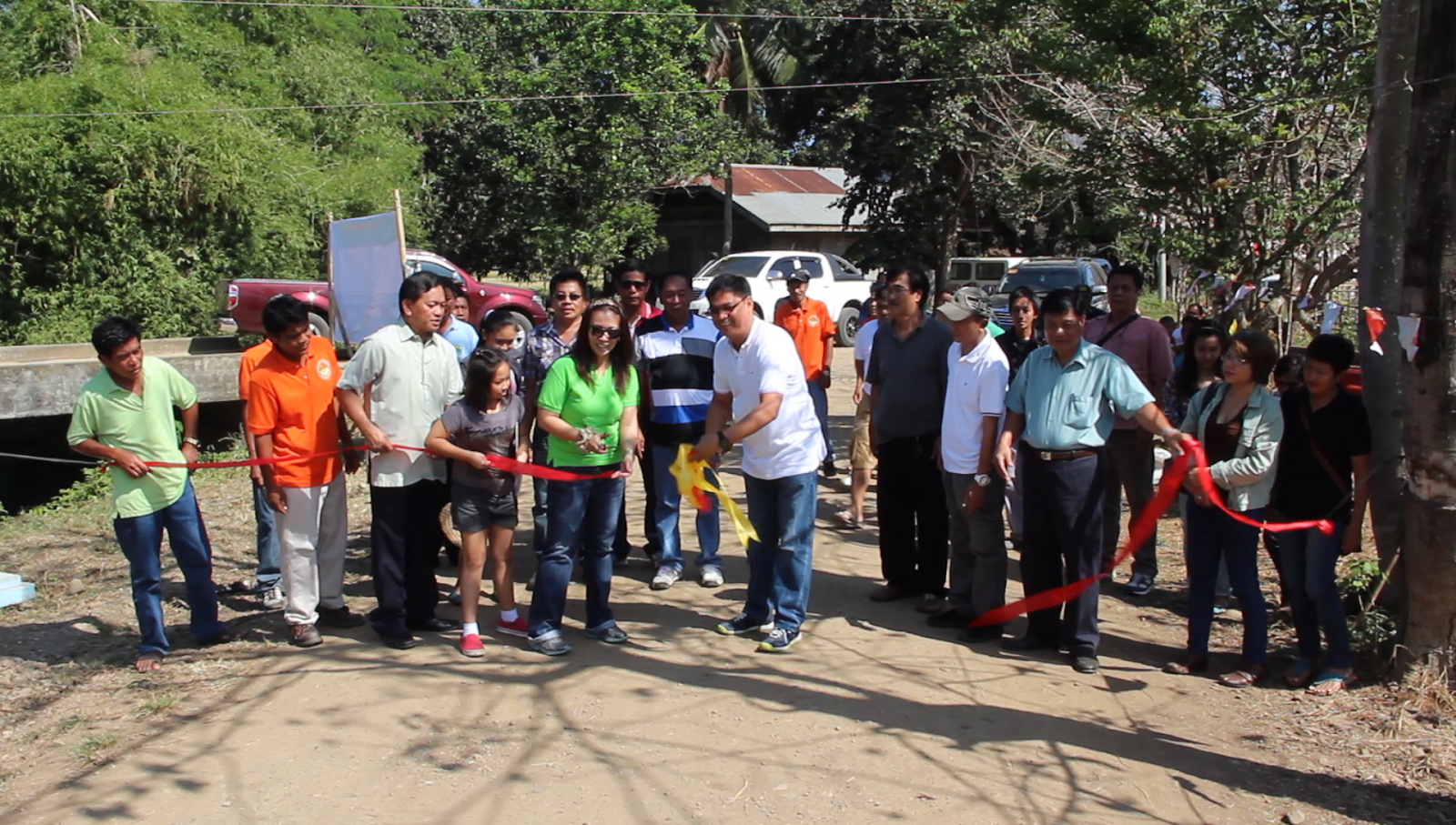
Buguey, Cagayan – Officials from the Department of Agrarian Reform (DAR) led by Atty. Marjorie P. Ayson, Regional Director (DAR Region 02) has turned over in favor of the Local Government Unit (LGU) of Buguey, led by OIC-Mayor Roderick Antiporda, among others, and the barangay officials of Tabbac, Buguey, Cagayan,  the responsibility for the utilization and maintenance of the rehabilitated and improved farm-to-market road during a turn-over ceremony held on March 19, 2013 at barangay Tabbac in Buguey, Cagayan province. Officials from the Department of Public Works and Highways (DPWH) Region 02 also attended the turn-over ceremony. 
The project involved the rehabilitation and improvement of the Tabbac Proper – Junction National Road (JNR) – Sitio San Francisco Road at Sta. Isabel Agrarian Reform Community (Sta. Isabel ARC), Buguey, Cagayan. The farm-to-market road has a length of 4.078 kilometers at a project cost of P7,297,746.21 and funded by the Department of Agrarian Reform Infrastructure Support Project III (DAR-ARISP3).

According to the barangays officials, the farm-to-market road project has significantly improved the quality of life of farmers in the area as they can now transport or load on their kuliglig (hand tractor with trailer) around 20 cavans of palay instead of the usual 7 cavans only before the FMR project was implemented. They can now also have more frequent trips to the market to sell their produce, such as vegetables and watermelon, among others. But the most significant improvement in the lives of ARBs is the fact that the number of traders have increased because of the new access to the farms/products in the community resulting to higher selling prices of farm produce by the farmers as they are now able to choose which trader offers the higher buying price. Additionally, the cost of hauling has been reduced by at least 30%, increasing the savings in favor of the ARBs. The completed FMR now also serves as an alternative route from the town proper to the Lallo International Airport in nearby town of Lallo, Cagayan.

The rehabilitation and improvement of the Tabbac Proper – Junction National Road (JNR) – Sitio San Francisco Road at Sta. Isabel Agrarian Reform Community (Sta. Isabel ARC), Buguey, Cagayan seeks to boost the productivity and income of agrarian reform beneficiaries and the members of their household who have been burdened with excessive fare and hauling costs of farm produce due to poor road condition. /cds

FEATURED POST

BETTER ROADS, BETTER LIVES: How DAR-Funded Farm-to-Market Roads Transformed Northwest Cagayan’s Agriculture

NORTHWEST CAGAYAN — For decades, the coastal and valley towns stretching across the  northwestern edge of Cagayan Province shared a beauti...